
Flying with Autistic Children: Travel Tips for First-Time Family Travelers
Are you a first-time family traveler planning to fly with an autistic child and feeling unsure about where to start?
Maybe this is your first big trip since diagnosis, or perhaps you’re preparing for your very first flight as a family navigating new needs and routines.
If that sounds like you, you’re in the right place.
My name is Sofia. I traveled with my children even before they were diagnosed with autism, visiting places like Singapore, Hong Kong, and Canada. Back then, I didn’t yet understand autism, so travel felt more spontaneous and less stressful in that way.
After the diagnosis, everything changed. Travel became something I had to plan more intentionally—not just as a traveler, but as a first-time family navigating autism on the move. The mindset shifted completely.
Later, because of my background working with Singapore Airlines, I gained the confidence to fly again—sometimes even solo with my two young children (ages 5 and 3).
Looking back, I still wonder how I managed it, but my love for travel always outweighed the fear. More importantly, I learned practical strategies that made it possible.
This guide shares those real-life tips to help first-time family travelers feel more prepared, more confident, and less overwhelmed when flying with autistic children.
Affiliate Disclaimer: This post may contain affiliate links. I may earn a small commission at no extra cost to you.
Tip 1: Choose a familiar destination and airline
When traveling with an autistic child, reduce unknowns wherever possible.
Pick a destination you are already familiar with.
Familiarity lowers stress for both parent and child because you already know what to expect on arrival.
The same applies to airlines. I chose Singapore Airlines because I had worked with them and trusted their service, especially when traveling as a parent with children.
Tip 2: Start with short flights first
Don’t begin with long-haul travel.
Start with shorter flights—ideally one to two hours. This helps your child gradually adapt to the experience of flying.
Some airlines and airports even offer mock travel programs where children can practice:
Security screening
Boarding procedures
Sitting on a plane
We tried this with Delta, and it was actually a positive and fun experience.
Tip 3: Try to avoid time zone changes (if possible)
If you can, choose destinations within the same or similar time zone.
Time changes can disrupt sleep, routines, and emotional regulation, which can make travel more challenging for autistic children.
Tip 5: Use airport assistance services (MAAS)
Many airports offer Meet and Assist services that help families navigate:
Check-in
Security
Boarding
These services are often free or low-cost, but must be requested in advance.
I personally didn’t use it because I felt confident at the time, but it’s a great option for added support.
Tip 4: Let them burn energy before boarding
This one made a huge difference for us.
Arrive early so your children have time to move around, walk, and explore the airport safely. Let them watch planes take off and land if they enjoy it.
A tired body often makes it easier for a child to settle once seated on the plane.
Tip 6: Inform the airline in advance
Always notify the airline if you are traveling with an autistic child.
Most airlines today are more trained and aware of neurodivergent passengers.
While support varies by airline and airport, giving advance notice helps them better assist you during boarding and the flight.
Tip 7: Plan meals ahead of time
Hunger can quickly escalate stress in children.
On international flights, meals are often served about two hours after takeoff. D
Delays can make this even longer.
To avoid issues:
Feed your child before boarding
Bring familiar snacks or favorite foods
Don’t rely only on airline meals
This small step prevents unnecessary meltdowns from hunger.
Tip 8: Use the airplane bathroom early
Airplane lavatories are small and can feel overwhelming.
Encourage bathroom use before boarding or early in the flight while things are still calm. It’s easier than waiting until there is urgency or turbulence.
Tip 9: Bring noise-canceling headphones
Noise can be unpredictable on planes—engine sounds, announcements, crying passengers.
Noise-canceling headphones can help reduce sensory overload, especially during:
Boarding
Takeoff
Turbulence
They’re one of the most useful travel tools you can bring.
Tip 10: Bring familiar toys or comfort items
Familiar objects help create emotional safety in unfamiliar environments.
Over time, you learn what works for your family. Each trip becomes easier not because the world changes, but because you become more confident navigating it.
I’ll be sharing more tips soon, including:
Favorite toys
Sensory items
Tablets with downloaded content
Comfort objects (blanket, stuffed toy, etc.)
These can help with transitions and waiting periods.
Final Thoughts
Traveling with autistic children is not about perfection—it’s about preparation, flexibility, and understanding your child’s needs.
Going through customs
Managing meals on long flights
Boarding and disembarking strategies
These can help with transitions and waiting periods.
Travel Mom With Autistic Kids
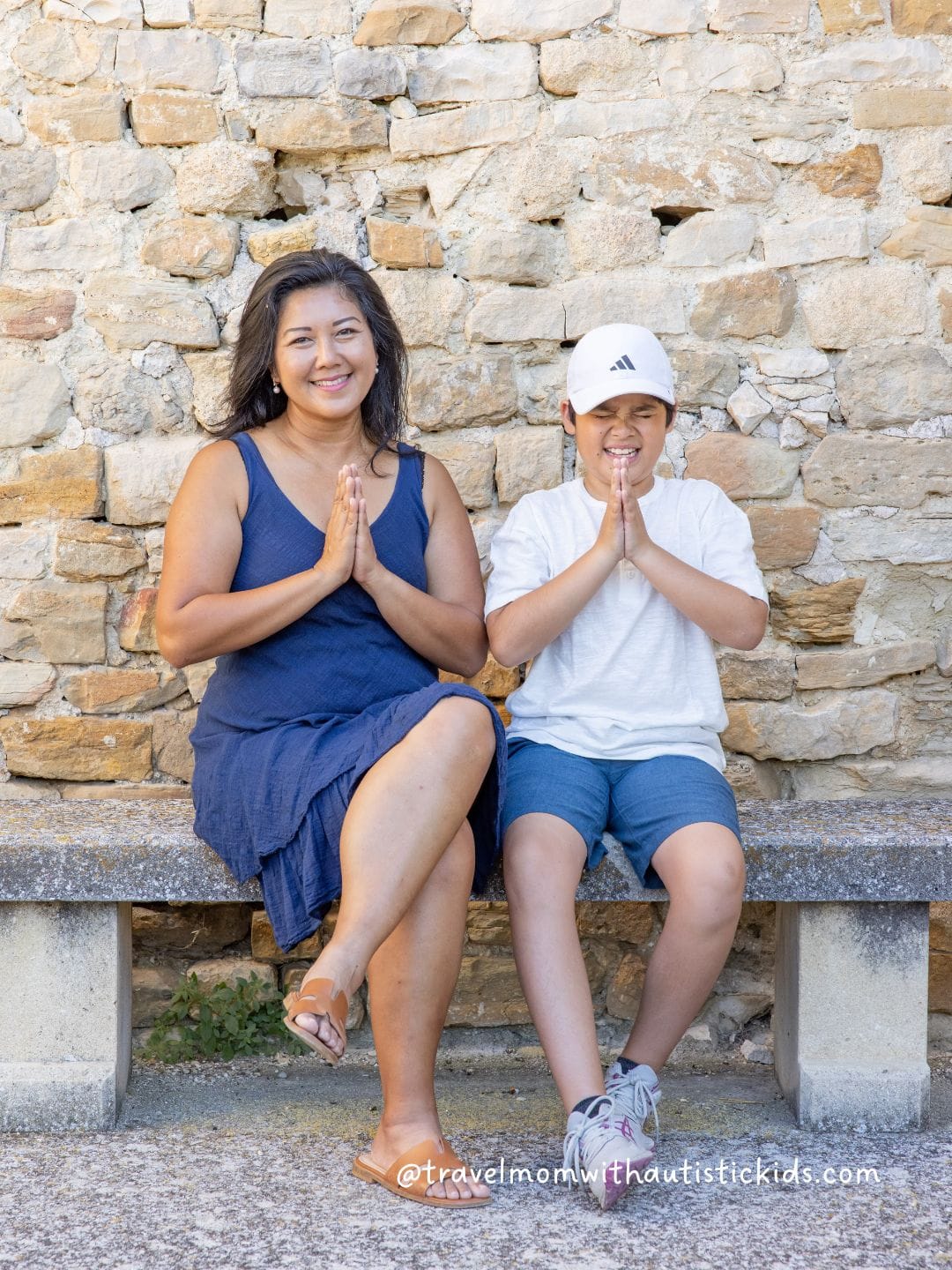
Hi, I’m Sofia — a travel mom and former flight stewardess with Singapore Airlines. Through experience (and a lot of learning), I now share practical, real-life travel tips to help first-time family travelers feel more confident and prepared when flying with autistic children.


JOIN MY MAILING LIST

Travel Mom With Autistic Kids | Created with © systeme.io